
I’m endlessly curious about people. I love them and I love food, so looking into a household fridge is something that I get quite excited about. You can find out so much by just by pulling back a refrigerator door – you can see what someone values, what they cook, what they’re excited about eating and what they rely on when life gets busy.
The Ancestral Food Fridge
I’ve been eating ancestrally for the past 15 years and the contents of my fridge reflect that. Ancestral eating is a way of life, rather than a strict set of rules, but there are certain things that you’ll often find in both mine, and other ancestral eaters’ fridges. This list in a great way to understand what the ancestral diet is, so let’s break them down:
Ferments
Fermentation is a backbone of the ancestral diet and you’ll always find ferments in an ancestral fridge.
Mine has vegetable ferments such as sauerkraut, dairy ferments like milk kefir and yogurt and fermented condiments including garlic and miso. Along with this, my fridge door houses drinks (made fizzy with the help of natural probiotics) like water kefir and, my family’s favourite, boza.

The actual fermentation of all of these happens on my worktop. Once the food or drink has reached the flavour and acidity I’m after, it goes into the fridge, where the cold slows the fermentation right down. That means it’s ready to enjoy over the coming weeks without changing too quickly.
My family don’t eat huge quantities. Instead, a spoonful of fermented vegetables alongside a meal, a glass of water kefir or a little boza as a nourishing snack brings variety, depth of flavour and living cultures into everyday eating.
If you’re new to fermentation, water kefir is one of the easiest places to start. It’s a naturally fermented, lightly sparkling drink that’s simple to make at home. If you’d like to explore one of the world’s oldest fermented grain drinks instead, have a read of What is Boza?. If you’d prefer to have a go at vegetable fermentation, check out my Super-Simple Sauerkraut.
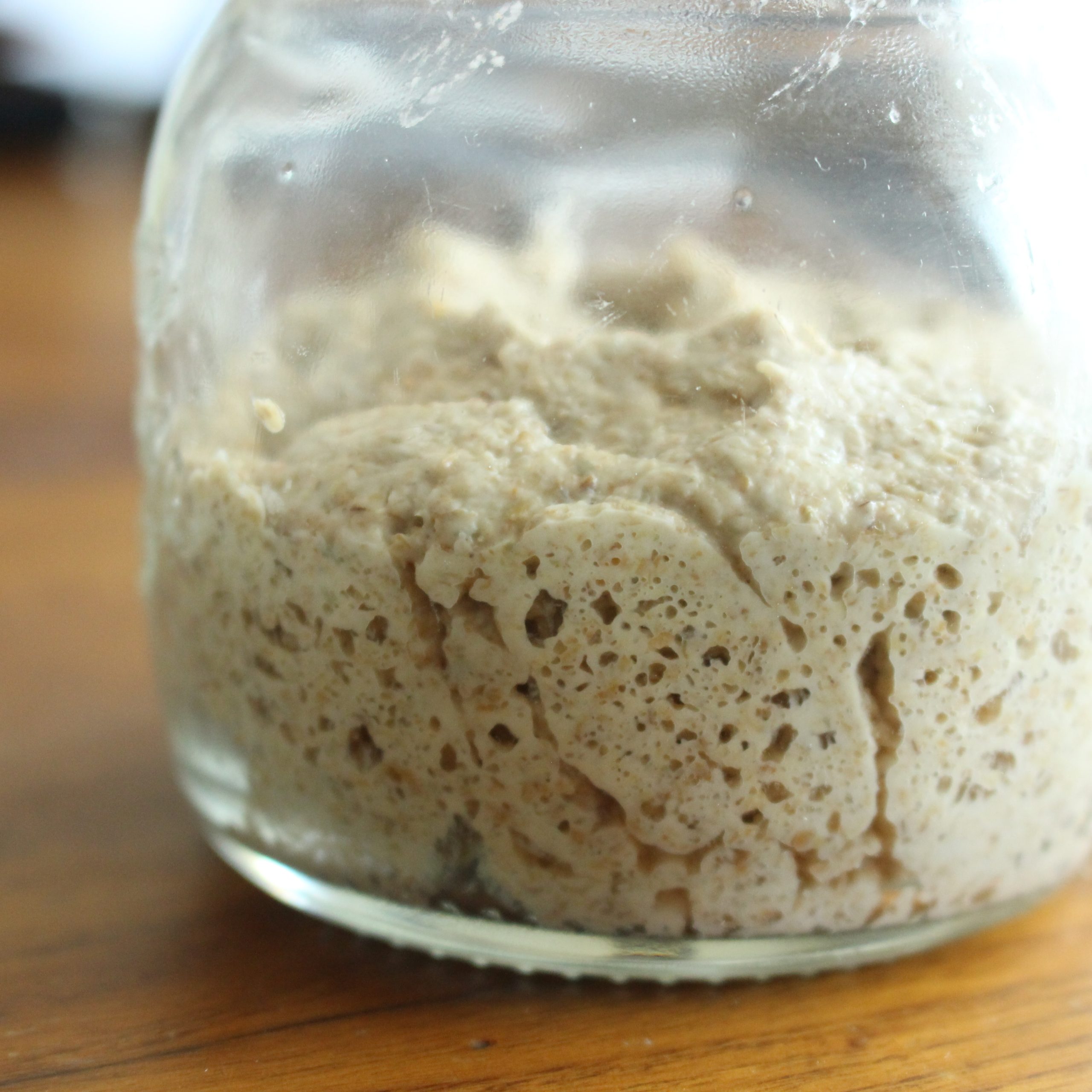
In addition to these edible ferments, I also store my sourdough starters in the fridge in between bakes – this makes them much easier to manage. I detail my process in my pay-what-you-can mini-course Make & Maintain a Rye Sourdough Starter
Raw Dairy
There is always some dairy in my fridge and, if I can source it, I choose raw milk products.
Most of the dairy sold today is pasteurised, a process born of the industrialisation. Raw dairy, by contrast, feels like a living food.
If raw milk isn’t available where you live, check for cheese instead, some are made with raw milk. You can also use traditional milk fermentation practises to make yogurt or kefir which can add multiple benefits to carefully selected pasteurised milk.
In addition to fermented dairy I also almost always have butter for spreading and cooking and very regularly cream too, which is served with fruit and goes into dishes such as stews and risottos.
Meat and Offal
Rather than choosing only the standard selections, popular in supermarkets, the ancestral diet uses a variety of meat, including lesser-known cuts and offal. These bring variety in terms of flavour and nutrients as well as often being the economical choice.
In my fridge, you’ll often find joints that require long, slow cooking, bones waiting to be made into stock, liver which will become pate, along with favourites such as sausages from my local farmer.
There’s also usually a lot of previously cooked leftover meat – they are especially valuable because they can make lunches or snacks quick and effortless.
Here’s my popular recipe for slow-cooked beef heart. The leftovers can be made into multiple meals. I talk about how I do this in practise in this podcast episode
Saturated Fat
Butter, tallow (from cows) and lard (from pigs) are always in my fridge, each kept in its own container and ready for cooking.
These traditional fats have being used to cook family meals for generations. I use them to roast vegetables, to fry eggs, in sheet pan dishes, to start soups and risottos, in stews, and also to fry pancakes. I also spread butter or lard on bread.

Unlike the seed oils that have become common in modern kitchens, these are the fats my ancestors would have recognised. Having them ready makes it easy to cook almost every meal with traditional fats rather than reaching for industrially processed alternatives.
I render lard and tallow myself at home from locally produced fat that I buy directly from my farmer. Here’s an introduction into rendering in your own kitchen.
Seasonal Vegetables
The contents of my vegetable drawer change with the seasons. For me, in the northern hemisphere, in winter it’s likely to be cabbages, root vegetables, leeks and hardy greens. Spring brings asparagus and fresh herbs, summer means tomatoes, courgettes and cucumbers, while autumn sees mushrooms and the last of the beans.

In an ideal world I’d grow all of these myself, but not all of us have the space, time or resources to do that. The next best thing is to buy locally whenever possible. Seasonal vegetables that haven’t travelled far are often fresher, taste better and support local growers too.
Condiments and Flavour-Bringers
Alongside mustard, horseradish and mayonnaise (often homemade) you’ll often find preserved lemons, fermented garlic, miso, chutneys, Worcestershire sauce and fish sauce in a fridge of someone who follows an ancestral diet.
These aren’t there because ancestral foodies cook elaborate meals. They’re there because a spoonful of something savoury, tangy or deeply fermented can transform a simple plate of meat and vegetables or a bowl of soup into something far more interesting. I regularly use miso in dishes such as this Breakfast Bone Broth Bowl.
Lots of Leftovers
Perhaps the biggest difference between the fridge of a family that eats an ancestral food diet and the average modern one is the number of leftovers.
A bowl of yesterday’s stew. Half a roast chicken. Cooked vegetables ready to become tomorrow’s soup. Stock cooling after making broth. Rice awaiting a teatime salad.

Cooking larger quantities saves time, reduces waste and means nourishing food is always within easy reach.
Many of our best meals begin not with a recipe but with opening the fridge and asking, “What can I make with what’s already here?”
A Fridge Full of Possibilities
People often imagine that an ancestral diet requires a fridge and pantry full of unusual ingredients. In reality, my fridge contains remarkably ordinary foods.
The difference isn’t so much what is there as how it’s been produced, how it’s prepared and how it fits together. Traditional fats instead of industrial oils. Fermented foods instead of ultra-processed snacks. Leftovers instead of ready meals. Seasonal vegetables instead of packets that have been shipped half way around the world.
Every fridge tells a story. Mine tells the story of a kitchen where food is cooked from scratch, fermented foods are always close at hand, and yesterday’s meal is often the beginning of today’s.

If you’d like a deeper look inside two ancestral food refrigerators on opposite sides of the world listen to What’s in our Fridges? from Ancestral Kitchen Podcast.
You Might Also Like:
Twenty Steps to an Ancestral Kitchen – this free PDF download with an informative resource list can be found at the top of any page on my podcast site.
5 Simple Ways to Start Cooking Ancestrally
What Does Eating Ancestrally Mean?
Bring ancient grain baking into your kitchen!
Download my free 30-page guide with five healthy and tasty 100% ancient grains recipes.
Hi, made your rye wholegrain sourdough bread and it worked out brilliantly. My previous attempts have been rocks and inedible. This bread had a wonderful texture and traditional flavour. Look forward to making the other recipes from your https://ancestralkitchen.com/ancientgrains/ 30 page guide. Thanks
Hi Geoffrey,
Thank you so much for taking the time to respond and tell me this. I’m so glad you like the bread. If it’s okay with you I might use your words in one of my posts? Do let me know how you get on with the other recipes!
Alison