

Making sauerkraut is one of the simplest ways to begin fermenting at home. All you really need is cabbage, salt and a little time.
But although the ingredients are simple, there are a few things that can make the difference between an easy, satisfying ferment and a jar that doesn’t quite behave as you expected.
I’ve made a lot of sauerkraut over the years, and I’ve made plenty of mistakes along the way. These nine tips are the things I’ve learned that make the biggest difference in my own kitchen—from choosing the cabbage and getting enough brine to keeping your ferment safely tucked underneath the liquid.
If you’re new to making sauerkraut, these are the things I wish I’d known when I started.
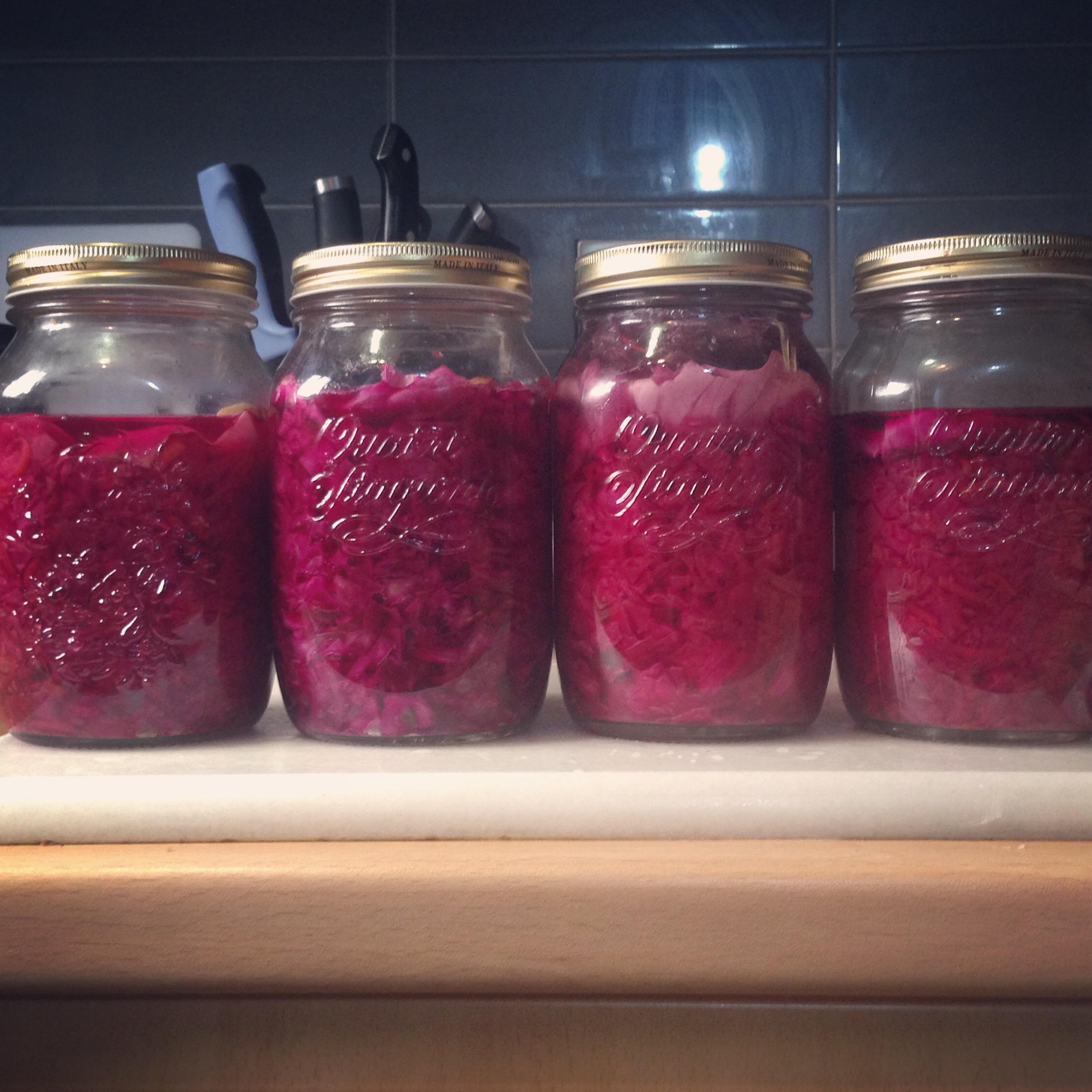
Ready to make sauerkraut?
If you’re not made sauerkraut before, you don’t need to master all nine of these tips before you begin. The best way to learn is to make a batch yourself.
I have a Super Simple Sauerkraut recipe that takes you through the whole process, from preparing the cabbage to packing it into your jar and leaving it to ferment.
It’s the straightforward, no-fuss method I recommend if you’re looking for an easy way to get started. Once you’ve made a few batches, these tips will help you refine your technique and troubleshoot anything that doesn’t go quite as expected.
1. Use a sharp knife
I bought myself a proper sharp knife earlier this year.
How on earth had I been chopping up 2kg (4lbs) of cabbage for sauerkraut before having a sharp knife?
It has made a huge difference to those mammoth cabbage-dicing sessions. When you’re preparing a large quantity of cabbage, a good, sharp knife makes the job considerably easier.
If you struggle with chopping cabbage for a long time, you can also use my simpler sauerkraut method here, which involves much less chopping.
2. Start with fresh cabbage
For a long time I couldn’t understand why, after adding salt to my cabbage and squeezing it, I sometimes had so little liquid. There simply wasn’t enough brine to properly cover the cabbage.
I eventually learned that the freshness of the cabbage makes a big difference.
Cabbages that have been sitting in cold storage for months before we buy them can contain considerably less available liquid than really fresh cabbage. Fresh cabbage releases its juices much more readily when salted and squeezed.
So, work hard to find fresh cabbage – or grow your own. It can make creating enough brine for your ferment much easier.
3. Use the right amount of salt
Getting the salt right is important when making sauerkraut.
I weigh the cabbage I’m using in grams and then multiply that weight by 1.375%. The resulting figure is the amount of salt, in grams, that I mix into the cabbage.
For example, if I have 1,000g of cabbage, I use 13.75g of salt.
If I later need to make additional brine to top up the liquid in my fermentation, I mix 5g of salt with every cup of water.
4. Give the cabbage time
Most sauerkraut methods recommend squeezing the cabbage soon after the salt has been mixed through it.
I’ve found it easier to let the salted cabbage rest before squeezing or pounding it.
After chopping my cabbage and mixing in the salt, I leave the bowl in the fridge for 24 hours.
When I come back to it, the cabbage has had plenty of time to release its juices, making the next stage much easier.
5. Don’t overfill your jars
Sauerkraut is alive while it ferments. As fermentation gets going, gases are released and the contents of the jar can rise.
If you overfill your jars, this can mean cabbage and brine bubbling over the top—particularly if you’re not using an airlock.
Leaving some space at the top of the jar helps lessen the impact.
This is the most cabbage I will put into a 1 litre/quart jar:

It’s tempting to squeeze every last bit into a jar, especially when you’ve spent time preparing a big batch of cabbage, but giving your ferment a little room can save a lot of mess.
6. Make sure you have enough liquid
One of the most important things when making sauerkraut is making sure the cabbage is covered by liquid.
If your salted cabbage doesn’t produce enough liquid to cover it, you may need to add some brine.
Sauerkraut is an anaerobic fermentation. In other words, it does not need or want access to oxygen. Keeping the cabbage beneath the liquid helps create the conditions the fermentation needs.
If your cabbage isn’t covered by enough liquid, mix up a brine using the salt ratio from tip 3 and use it to make up the difference.
7. Keep the cabbage underneath the brine
Having enough liquid isn’t enough on its own—you also need to make sure the cabbage stays underneath it throughout fermentation.
I do this by firstly cutting a circle of cabbage to use as a “cap”:

I then weight the cabbage and the cap down with “pickle pebbles”, little circular glass weights:

The cap helps keep smaller pieces of cabbage together, while the weights hold everything underneath the brine.
8. Put something underneath your fermenting jars
If you’re not using a fermentation lock, brine will likely escape from your jars as the sauerkraut ferments.
And if you don’t put the jars onto something, that brine will go straight onto your work surface.
Sometimes I use plates for this, but more recently, to save space in my tiny kitchen, I’ve been using a simple plastic tray:

It’s a very small thing, but it makes fermenting much less messy. If a little brine escapes, it’s caught by the tray rather than running across the kitchen worktop.
9. Label your ferments
I spent far too long not doing this.
I’d start a ferment and then, a few days -or sometimes weeks – later, find myself wondering when exactly I’d made it.
Now I use masking tape and a Sharpie to label all my ferments with, at the very least, the date.
It takes seconds and makes such a difference. Once you have several jars of vegetables fermenting at different stages, you’ll be very glad you know when each one was started.
Frequently Asked Questions
What kind of cabbage is best for making sauerkraut?
Fresh cabbage is the most important thing to look for. Cabbage that has been stored for a long time can be drier and may not release enough liquid when salted.
If you can find freshly harvested cabbage, or grow your own, that’s ideal.
As to variety, hard light green or deep red cabbages – the weighty ones with closely packed leaves – produce the best results.
Can I make sauerkraut without special equipment?
Yes. You don’t need complicated equipment to make sauerkraut. A jar, a sharp knife and something to use as a weight are enough to get started.
Where should I keep my sauerkraut while it ferments?
Keep your sauerkraut at room temperature somewhere where you can easily keep an eye on it.
I like to keep my jars somewhere accessible in the kitchen. That way I can see what’s happening, check that the vegetables remain underneath the brine and deal with any liquid that escapes.

How long does sauerkraut take to ferment?
The length of fermentation depends on the conditions and on how you like your sauerkraut. Taste is a useful guide: as fermentation progresses, the flavour becomes increasingly sour.
If you’re new to fermentation, it’s worth keeping an eye on your jar and tasting it as it develops so you can discover what stage you enjoy most.
In my kitchen, which ranges between 17C and 25C (62-77F), I usually leave my kraut about two weeks before transferring it to the fridge.
Why is my sauerkraut bubbling?
Bubbling is a normal sign that fermentation is taking place. As the microorganisms ferment the cabbage, gases are produced.
This is also why sauerkraut can rise up in the jar and why brine may escape during fermentation. Leaving some space at the top of the jar and putting your jars on a tray makes this much easier to manage.
When is my sauerkraut ready to eat?
Your sauerkraut is ready when it tastes good to you.
As it ferments, the cabbage develops a more pronounced sour flavour. You can taste it as it progresses and decide when you like the balance of flavour and texture.
Once you’ve found the point you enjoy, you’ll have a much better idea of how long to ferment your next batch.
How can I store my sauerkraut when it’s ‘done’?
When the sauerkraut is fermented to your liking, transfer it to a refrigerator. Fridge temperatures stall the fermentation, and the kraut will keep for many many months this way.
It is then ready for you whenever you want it!
In what ways can I eat my sauerkraut?
Here are my five favourite ways to eat sauerkraut:
- Sprinkled on top of fried or poached eggs
- Mixed into a salad
- In a sandwich
- Topping a stew just before serving
- With sausages!
You might also like:
Super Simple Sauerkraut – You don’t need to stand there chopping and squeezing all day. Follow my method and use your food processor
Fermenting Vegetables: Your Questions Answered – Ancestral Kitchen Podcast episode with tonnes of information about sauerkraut and other veg ferments
7 Ways to Stay on Track with your Gut Healing – gut healing is not easy. This mini pep talk will help you get some more motivation and perspective.

Bring ancient grain baking into your kitchen!
Download my free 30-page guide with five healthy and tasty 100% ancient grains recipes.