
If you love porridge, you are in good company. Humans have been eating porridge in one form or another for at least 32,000 years, making it one of the oldest cooked foods still going today! Long before breakfast cereals, recipe books or even agriculture, people were soaking, grinding and cooking grains into warm, sustaining bowls of comfort.
In this post, we’ll explore what porridge really is, where it comes from, and why it has endured for millennia. We’ll travel from Stone Age hearths to Scottish kitchens, from barley and rye to oats and fermentation, and uncover how traditional porridge was made, eaten and valued. If you’ve ever wondered why porridge feels so deeply nourishing — or how to make a better bowl using ancestral methods — keep reading!
What Is Porridge? A Traditional Definition
Across the Atlantic, the words oatmeal and porridge mean very different things.
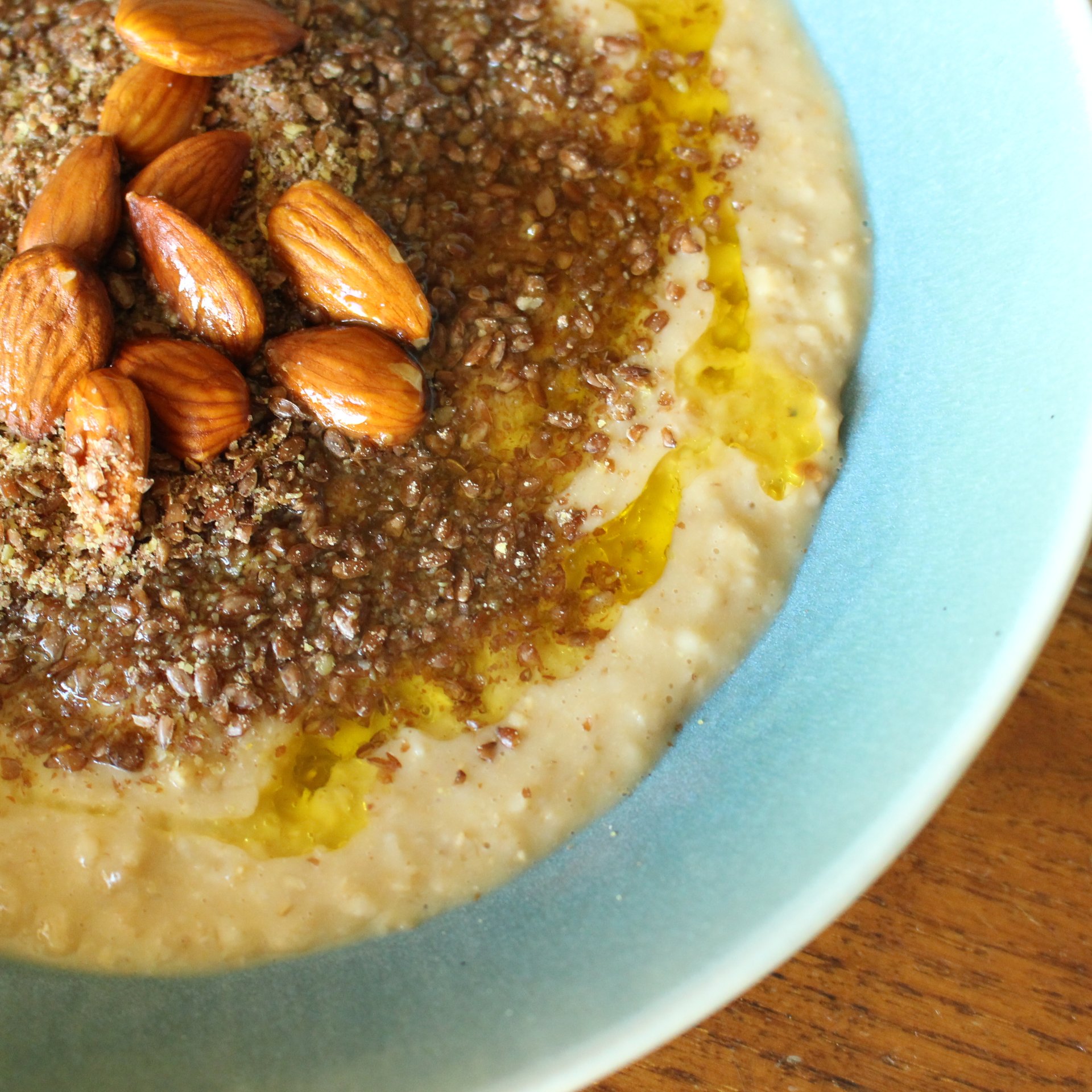
In the US, oatmeal usually means one specific dish: oats cooked with milk or water, often sweetened with brown sugar or maple syrup. In the UK (and much of northern Europe), the word porridge has traditionally been broader. It isn’t tied to one grain or one method. Porridge is, at heart, a grain-based stew — something cooked slowly in a pot.
The history of word itself tells the story. Porridge appears in English in the early 16th century and is closely related to pottage: a thick soup or stew cooked in a pot. The French potage and even the Latin porrum (leek — often used in thick stews) hover in the background. By the 17th century, porridge had come to mean a cereal cooked in water or milk. In Scotland it became parritch; in Ireland, stirabout.
When European settlers crossed to North America in the 17th and 18th centuries, they took the dish porridge with them — but used whatever grain grew locally, most often maize. Oatmeal didn’t take off in the US until later, when the company Quaker took advantage of recently-invented technology to roll oats: they saw a potential market for a new breakfast food and their ‘oatmeal’, promoted with the first ever national advertising campaign for a breakfast cereal, caught on.

How Long Have Humans Been Eating Porridge?
Porridge is ancient. Astonishingly ancient.
Archaeological finds in Italy show that around 32,000 years ago people were already drying, heating, grinding and cooking wild oats. Residues on a stone pestle reveal swollen, gelatinised oat grains — in other words, porridge.
In Denmark there is evidence of grain porridges from around 4200 BCE. And the famous Tollund Man, a bog body from around 400 BCE, had eaten a porridge-like meal shortly before his death — mostly barley, not oats.
This matters, because it reminds us that porridge is not all about oats. Oats are just one chapter in a much longer story.
Porridge Around the World: Grains, Roots and Legumes
Once you start looking, porridge is everywhere.
Rice becomes congee. Wheat becomes frumenty or cream of wheat. Barley was widely used in Britain before oats took over. Maize gives us polenta, atole, mush and grits. Millet makes glorious, creamy porridges across Africa and Asia. Buckwheat becomes kasha. Rye becomes the dark, sour Danish øllebrød. Sorghum, roots like taro (poi), even legumes (pease pottage) all find their way into the pot.
If you search for porridge with an open mind, you will almost certainly find one you have never tried. And that’s before we even begin to explore the many, many ways oats themselves can be made into the dish.
Traditional Oat Porridge: What, No Rolled Oats?!
Rolled oats dominate our shelves because they cook quickly. But they are a recent invention – roller milling only being developed in the late 1800s.
Traditionally, porridge was made from oats ground into a meal on a stone mill (confusingly, these stone-ground oats are called ‘oatmeal’ in British English). These stone-ground oats came in different grades – fine, medium or coarse/pinhead. Pinhead oatmeal, roughly the size of steel-cut oats, was especially prized for porridge. It takes longer to cook, but rewards you with depth of flavour and a far better texture.

Rolled oats, before you buy them, have been heat processed twice – once to stabilise them and a second time to help them roll more uniformly. Oatmeal, stone-ground oats, in comparison, have only been heat-treated once, for stabilisation. Less processing means more flavour, hence ‘proper’ porridge, made with stone-ground oats, does not need to be smothered in sweeteners to be enjoyable. Save the crazy toppings for the heavily-processed instant oats!
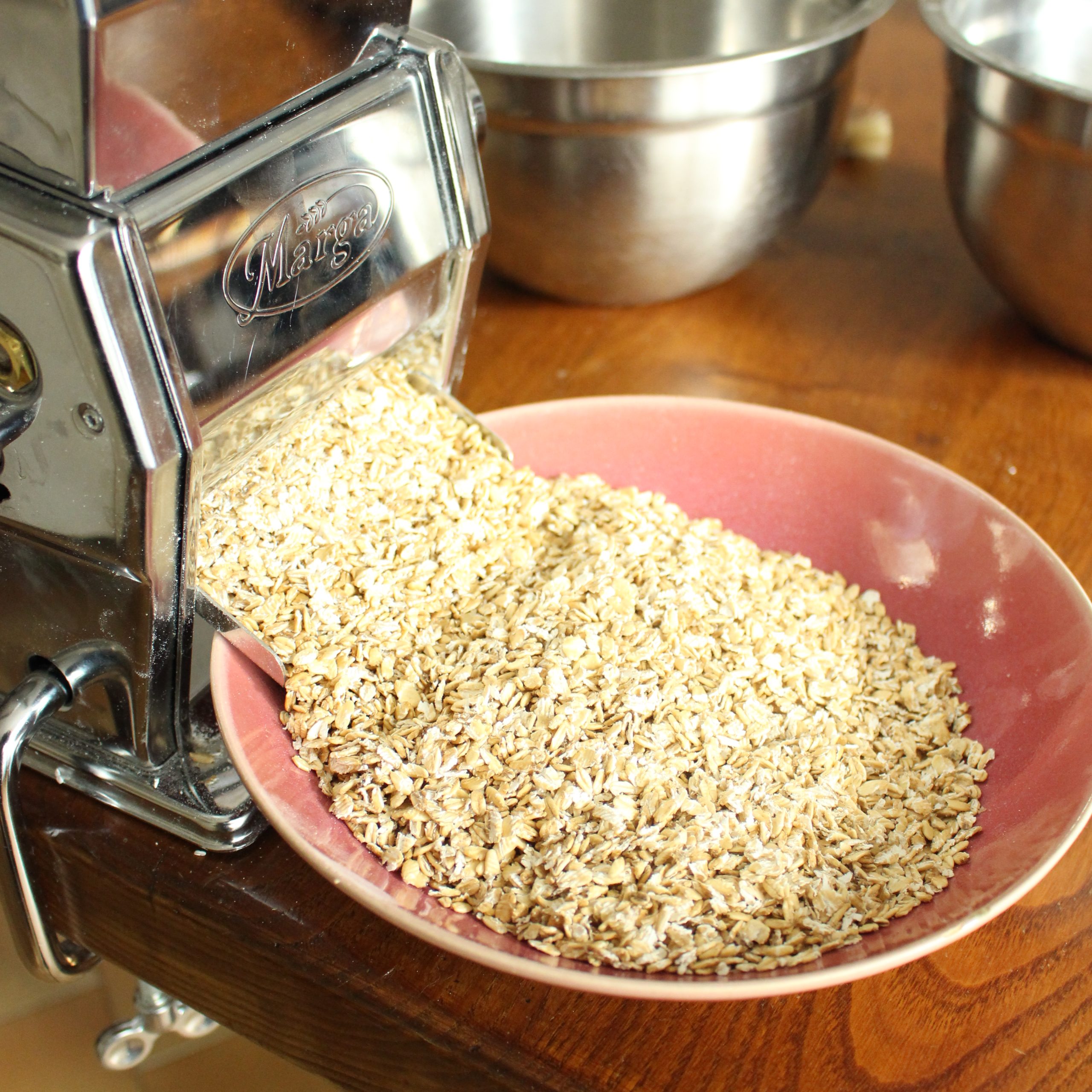
If you truly love porridge, one of the biggest upgrades you can make is to move away from shop-bought rolled oats – switch to pinhead oatmeal (or, if you’re in the UK, steel-cut oats) or roll your own oats from the whole grain at home. I’ve written a detailed guide on how to roll your own oats (and why it makes such a difference).
How to Make Traditional Oat Porridge (The Slow Way)
These days, oatmeal or porridge (depending on where you hail from) seems to be all about speed – the more quickly it can be cooked, the ‘better’. But cooked quickly, we miss out on flavour, texture and nutrition.
Here’s how you can make porridge more traditionally:
For everyday, pinhead (or steel-cut) oatmeal makes a superb porridge. It needs time — but you’ll not be tied to the stove:
- Soak pinhead oatmeal overnight in water (use four times as much water, by volume, to the oats).
- In the morning, bring the oats and their soaking water to the boil, then simmer gently for around 30 minutes, stirring occasionally.
A method that produces an even better porridge, and one that mimics the very long cooking times of the past, needs a two-day approach:
- On the morning of day one, soak 1 cup pinhead oatmeal in 1½ cups water.
- In the evening, add a further 3 cups water, bring to the boil, then simmer gently for 30 minutes.
- Turn off the heat and leave, covered, overnight.
- The next morning, slowly reheat the porridge.
The result is a rich and deeply satisfying porridge — worlds away from anything hurried.
You can get three traditional oat recipes in my free download The Heritage Oat Collection. Enter your details below and I’ll send it to you inbox!
How Porridge Was Traditionally Eaten in Scotland
The Scots did not add sugar or honey to their porridge. In fact, porridge, traditionally, for them, and for all the other British porridge-eaters was a savoury dish – cooked with water and salted before serving.
Very often brought to the table in a communal bowls, each person would have their own spoon, usually made from horn. Milk, cream or buttermilk would be set on the table in a separate bowl. Rather than mixing it through, people would lift spoonfuls of hot porridge and dip them into the milk or cream as they ate.

Leftover porridge was never wasted and we can use it in our modern kitchens too! Try reheating it with a little more liquid, slicing it and eating cold, adding it to bread dough for a super-soft crumb, blending it into soups for extra creaminess or mixing it into a stiff dough with flour and eggs before frying into a thick pancake.
Fermented Porridge, Sowans and Forgotten Oat Traditions
Fermenting oats was once common, and for good reason. Fermentation improves flavour, makes nutrients more available, helps break down starches and phytic acid, and introduces beneficial bacteria.
One of the most fascinating Scottish oat dishes is sowans. Once central to Scottish life, sowans was made from the fermented soaking water of oats – creating both a porridge and a probiotic drink. It was born from thrift and necessity but, having made it regularly in my own kitchen now for nearly five years, I can attest that it is also absolutely delicious!

If you want to explore oat fermentation in more depth, I cover it extensively in episode 70 of my podcast, Ancestral KItchen Podcast: Fermenting Oats.
Why Porridge Is the Original Comfort Food
Porridge endures because it works. It is cheap, adaptable, nourishing and deeply comforting. And, these days, we can make it however we wish – plainly or elaborately, savoury or sweet, quickly or slowly.
Next time you wrap your hands around that steaming bowl, remember you are not indulging in a modern trend. You are standing in the shoes of your ancestors and participating in a delicious food tradition that stretches back tens of thousands of years.

You Might Also Like:
Traditional Scottish Oatcakes (Recipe)
Different Types of Oats (& How to use Each the Traditional Way)
Bring ancient grain baking into your kitchen!
Download my free 30-page guide with five healthy and tasty 100% ancient grains recipes.
greetings from northern virginia! I am currently listening to the podcast episode number 118 and I just wanted to say how much I appreciate the reference to one of my favorite books of all time, Looking through the glass Darkly. I thought that was hilarious spin on looking through the Pyrex glass darkly. I just wanted you to know that there was someone out there who totally got that reference! hope you guys have a great day
Thanks Patti! If you use Apple and have a moment, it would mean a lot to us if you could leave a 5* review!
You said “around four times the volume by weight” but that is contradictory.
Do yoe mean “four times the amount by volume” or “four times the amount by weight”.
Also I was supprised that your search system produced no results for skirlie, scottish fried oats.
My apologies for this mistake. I’ve corrected it. It should be four times the amount by volume. I enjoy making skirlie and will be including a recipe for it in my book about oats but I haven’t got round to writing it up on here yet.